What is learning science?
The Science of Learning brings together research from cognitive science, educational psychology, and instructional design to help educators better understand how learning happens.
OUR DEFINITION
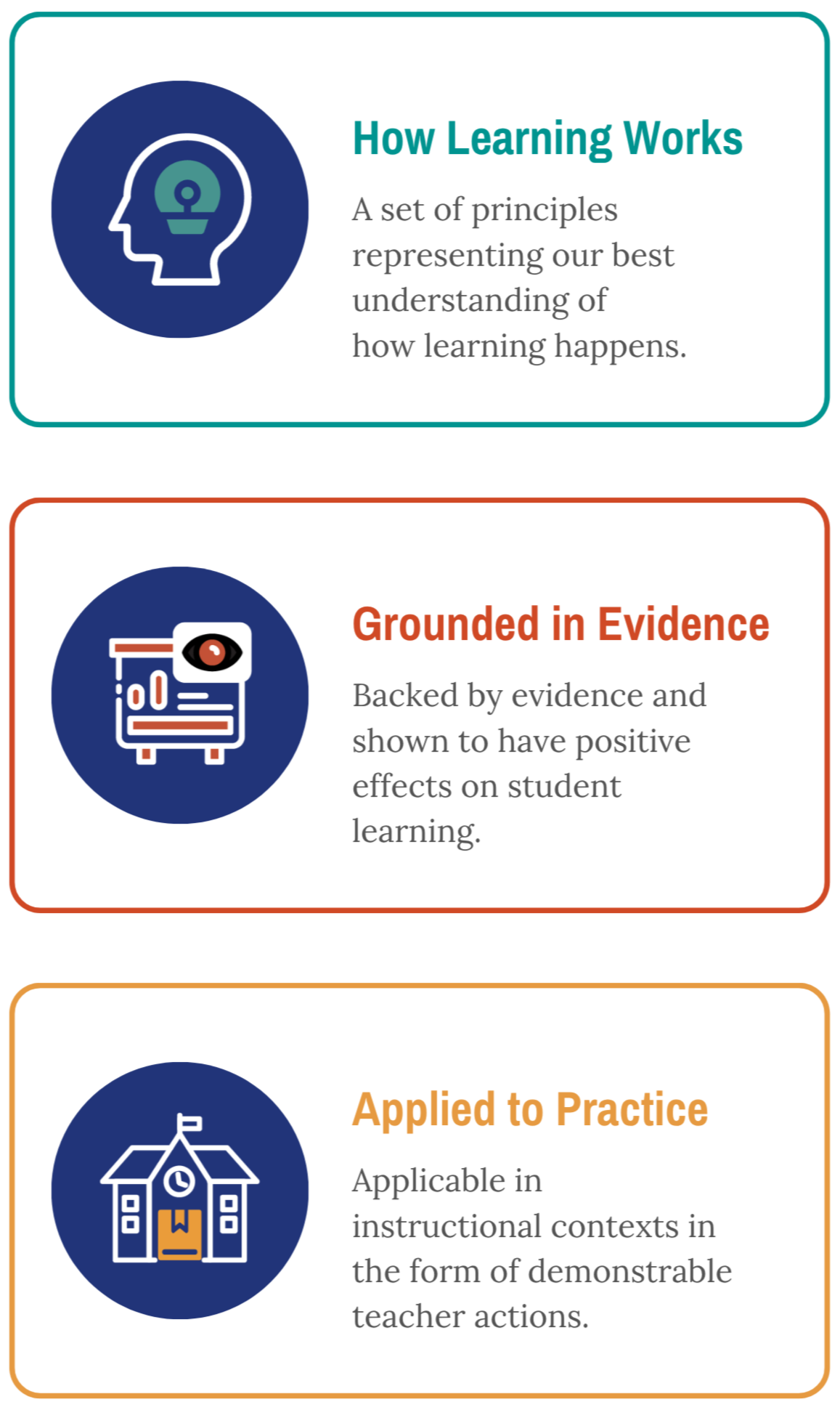
Learning Science is the study of how people learn—and how educators can use that knowledge to design instruction that helps every student succeed.
Learning Science is…
Why it matters…
Every student deserves to be taught by a professional who understands how learning happens, and every teacher deserves to understand how teaching happens in order to know what works and why. Applying the science of learning supports this, not through yet another initiative, but by offering an evidence-informed lens through which we can improve our practice and accomplish our goals.

LEARNING SCIENCE KEY CONCEPTS
Hover over any card to flip and learn more
 Model of the Mind
Understanding learning begins with understanding how attention, working memory, and long-term memory work together. This model helps educators design instruction that supports durable learning rather than temporary performance.
 Attention
Attention is the gateway to learning. Instruction that deliberately directs students' attention toward the most important ideas increases the likelihood that those ideas will be remembered.
 Cognitive Load
Working memory has limited capacity, so too much information at once can overwhelm learning. Effective instruction manages cognitive load so students can focus their mental effort where it matters most.
 Effortful Thinking
Students learn more when they actively think about ideas instead of simply encountering them. Questions that require explanation, reasoning, and connection create stronger, more lasting learning.
 Prior Knowledge
New learning is built on what students already know. Activating and connecting to prior knowledge helps learners make meaning and retain new information more effectively.
 Memory & Retrieval
Learning isn't complete when students understand something once — it becomes durable when they can successfully retrieve it later. Purposeful retrieval strengthens memory and improves long-term retention.
 Modelling
Worked examples, varied examples, and think-alouds help learners build accurate schemas. When experts make their thinking visible, novices begin to build their own interconnected networks of ideas.
 Motivation
Students invest more effort when learning feels meaningful, achievable, and worthwhile. Motivation alone doesn't guarantee success, but feelings of achievement can increase student motivation.
Explore the foundational ideas that explain how learning works